Event Recap: Belonging without Othering, An Evening of Stories in Berlin

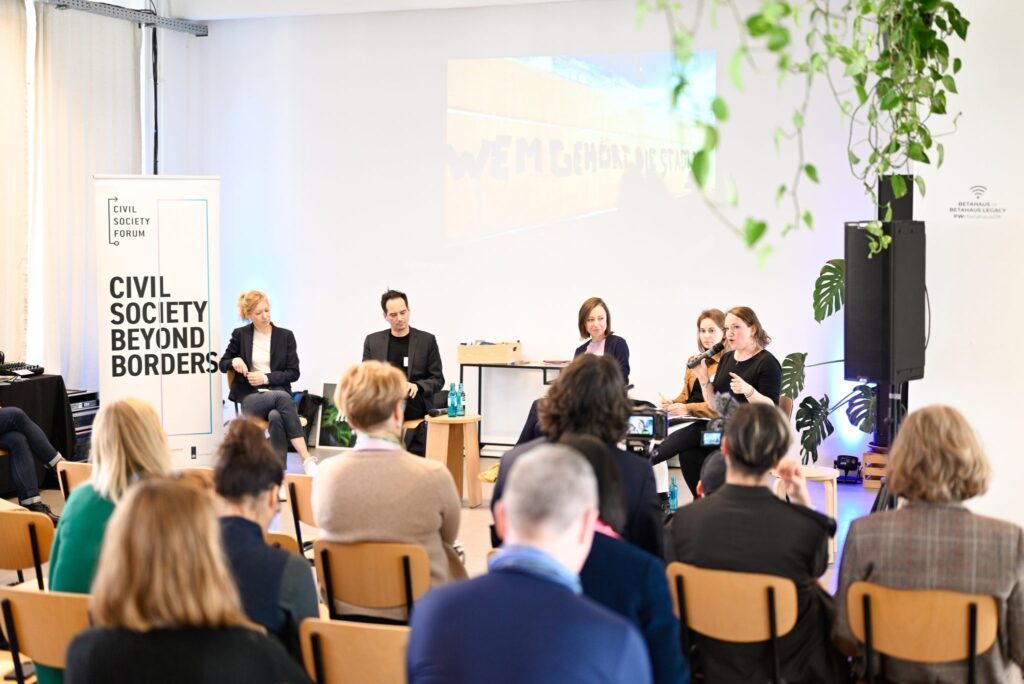
Across Europe, the question of who belongs — and on whose terms — has rarely felt more charged. Amid migration, deepening polarisation and a rising politics of us-and-them, it is a question more people are sitting with. That’s why, as part of our Berlin Hub initiative in July, in a former piano factory in Berlin, around a hundred people gathered around the following question: how do we find belonging across difference — without flattening that difference?
Holding the Line: ILGA-Europe at 30
When a government moves against LGBTI people, it is rarely finished there. That has been one of ILGA-Europe’s main contentions for over a decade: attacks on LGBTI rights are often the entry point for wider repression.
The Chișinău Declaration: A Watershed Moment for the European Human Rights System?

On 15 May 2026, the Committee of Ministers of the Council of Europe adopted a ‘political declaration’ about migration and the European Convention on Human Rights in Chișinău. Rather than focusing on how to improve the Convention’s effectiveness, a number of states are instead pushing to narrow certain rights protections, particularly for migrants. It may prove to be a watershed moment – and not a positive one.
Die Menschen in und aus der Ukraine brauchen unsere Unterstützung jetzt!

Am 24.02.2026 jährt sich zum vierten Mal Russlands umfassender Angriff auf das gesamte Territorium der Ukraine. Vier Jahre später wird der Krieg gegen die Ukraine vor allem aus militärpolitischer Sicht diskutiert, es finden auf hoher politischer Ebene Verhandlungen über Grenzverschiebungen, Waffenstillstand und NATO-Mitgliedschaft statt.
Environmental organisations under authoritarianism

Despite the growing repressions on opposition, civil society and media representatives in Russia since the beginning of the full-scale invasion of Ukraine in 2022, not all civil society structures, including environmental protests, have disappeared. Across many regions in the country environmental groups are protesting against local problems, such as air and water pollution, mismanagement of waste or demolition of green zones. Some of the activists are being prosecuted, but a number of campaigns have also led to positive results.
Journalism Under Authoritarianism in Serbia: A System Designed to Intimidate

Authoritarian systems rely on the normalisation of violence. Threats against journalists are very rarely investigated, creating an atmosphere of impunity. As for physical attacks, they are fairly rare, but they happen – and there is also little interest in fully investigating them. The message is clear: you are on your own.
Joint appeal for a Council of Europe Convention on Transnational Repression
We, the undersigned civil society organisations, call upon the Member States of the Council of Europe
to take urgent and collective action to address the growing phenomenon of transnational repression
(TNR) through the adoption of a Council of Europe Convention dedicated to preventing and combating this serious and evolving threat to human rights, democracy and the rule of law in Europe.
Кризис многостороннего сотрудничества: какова роль гражданского общества и что ждет ООН
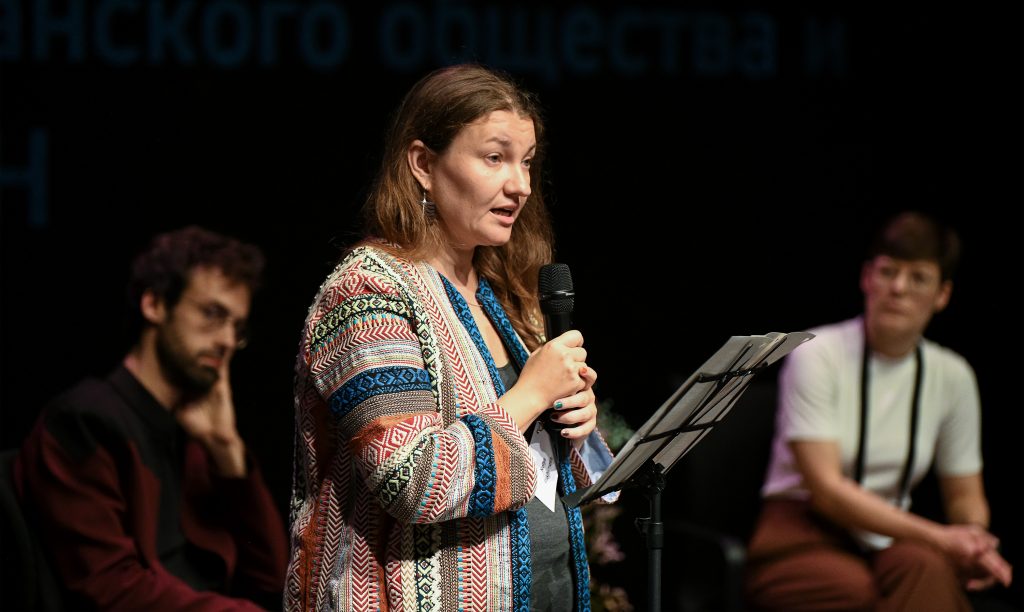
Из моего опыта участия в международных процессах ООН по вопросам устойчивого развития могу с уверенностью сказать: ситуация критическая. Даже за относительно короткий период работы в системе ООН я стала свидетелем очевидного упадка во многих сферах — многостороннее сотрудничество действительно переживает серьёзный кризис.
What do the recent presidential “elections” mean for Belarusian civil society?
Authoritarian regimes never have a positive attitude toward civil society, especially its institutionalised forms and civil society organisations.
Annual Conference in Berlin on “Democracies in Peril”
This year our Annual Conference focused on the theme “Democracies in peril?
