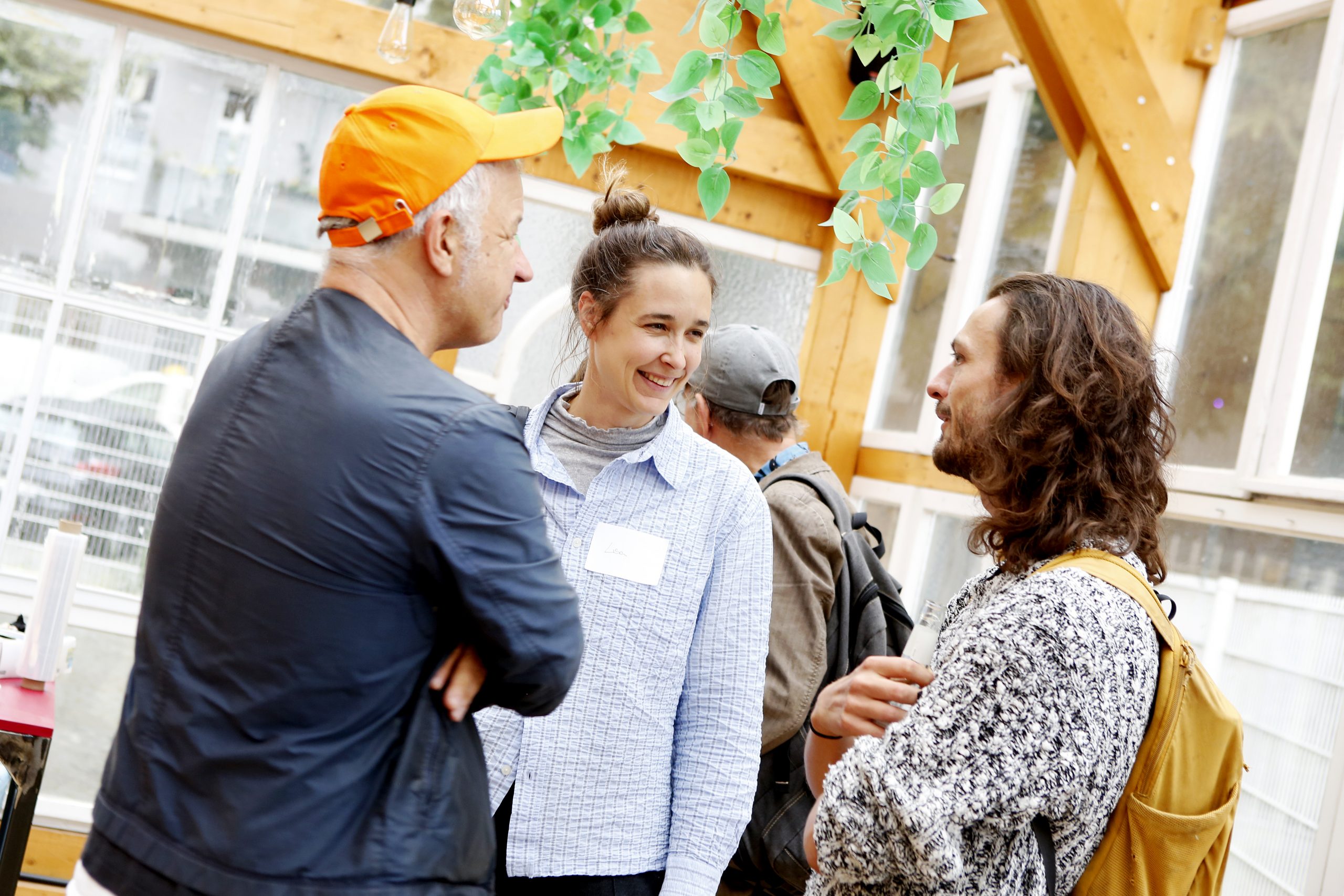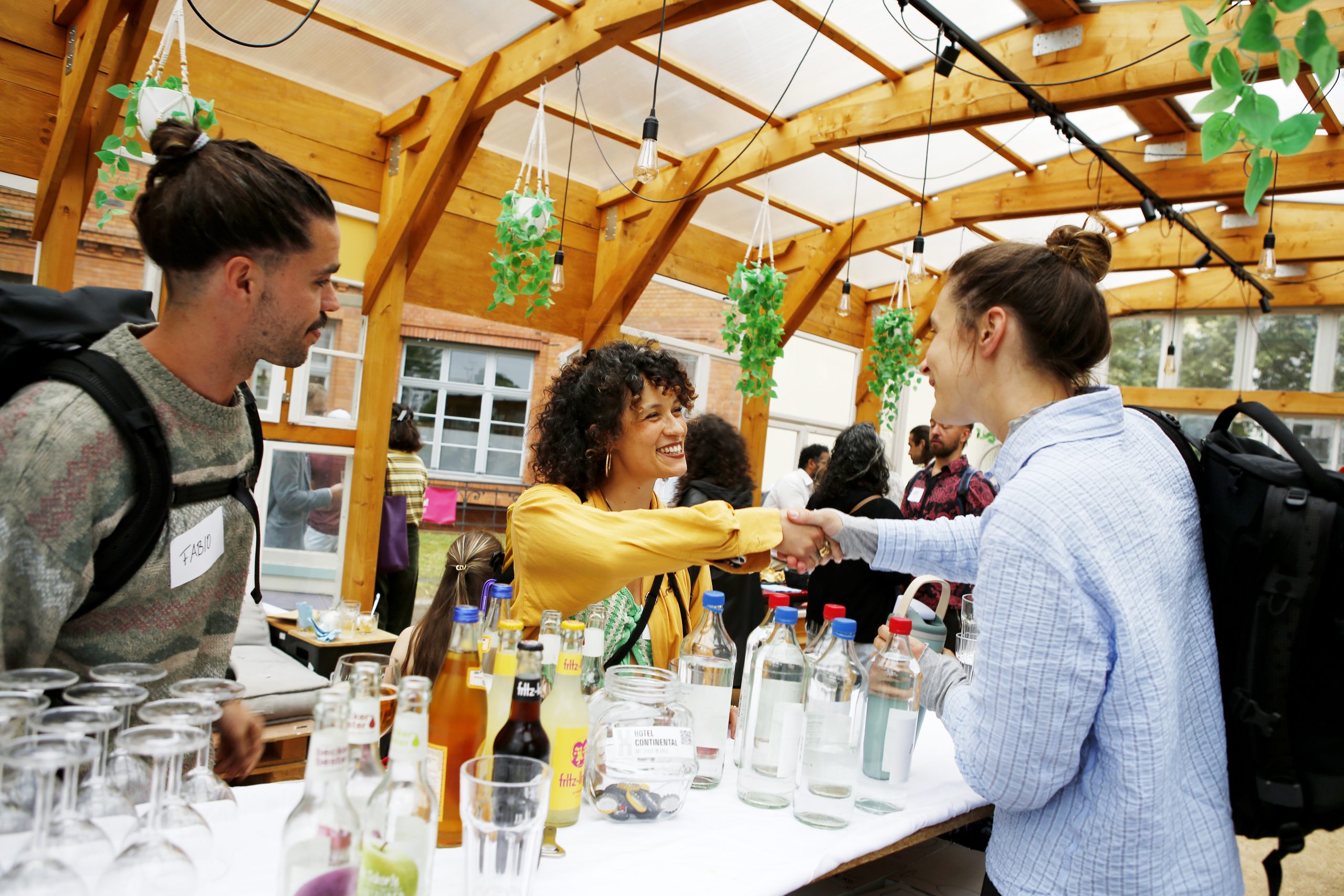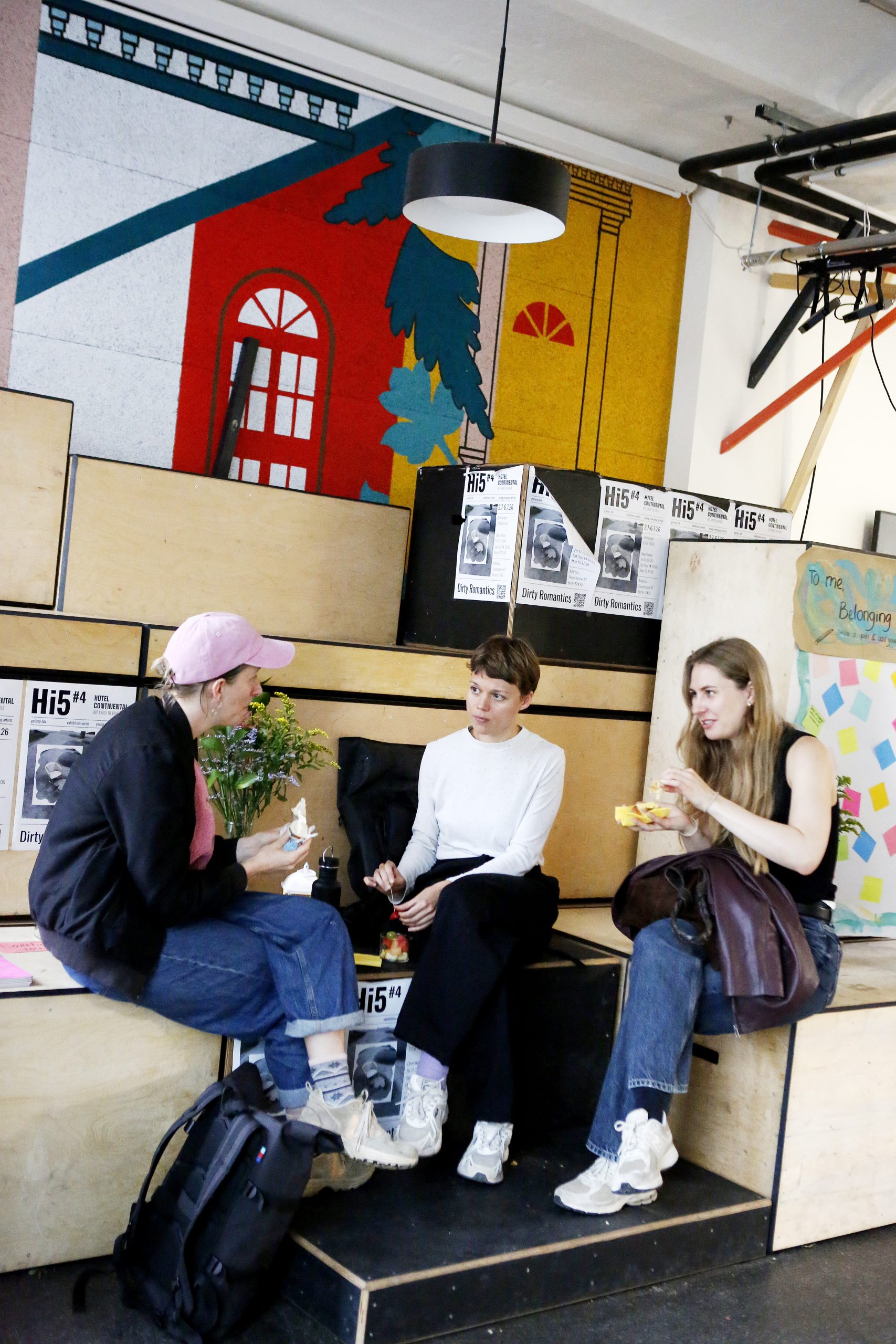
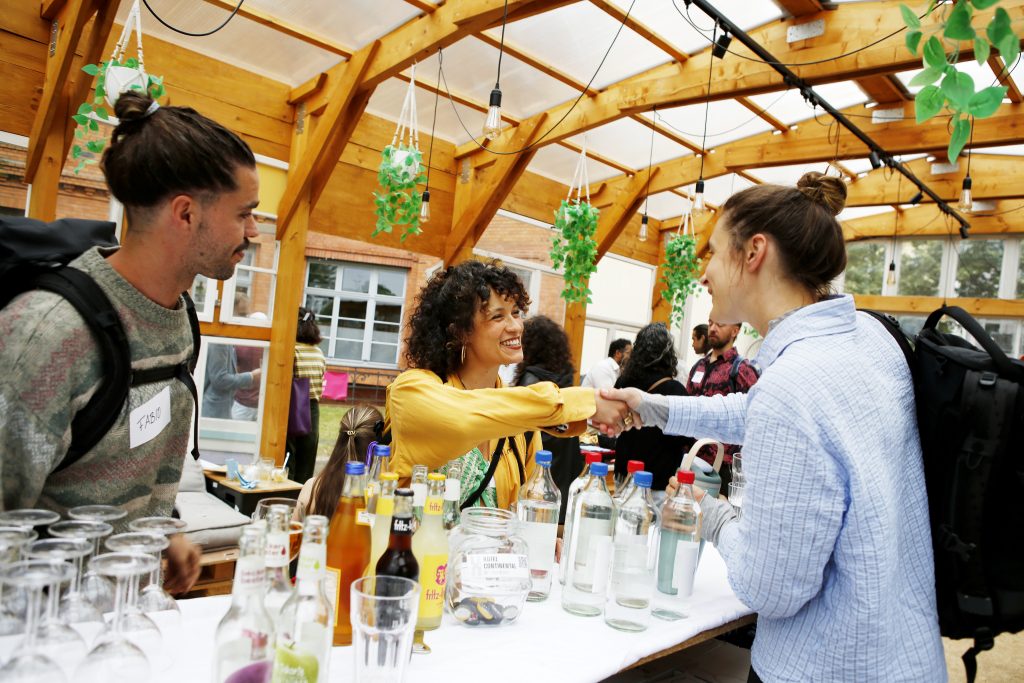
Across Europe, the question of who belongs — and on whose terms — has rarely felt more charged. Amid migration, deepening polarisation and a rising politics of us-and-them, it is a question more people are sitting with. That’s why, as part of our Berlin Hub initiative in July, in a former piano factory in Berlin, around a hundred people gathered around the following question: how do we find belonging across difference — without flattening that difference?
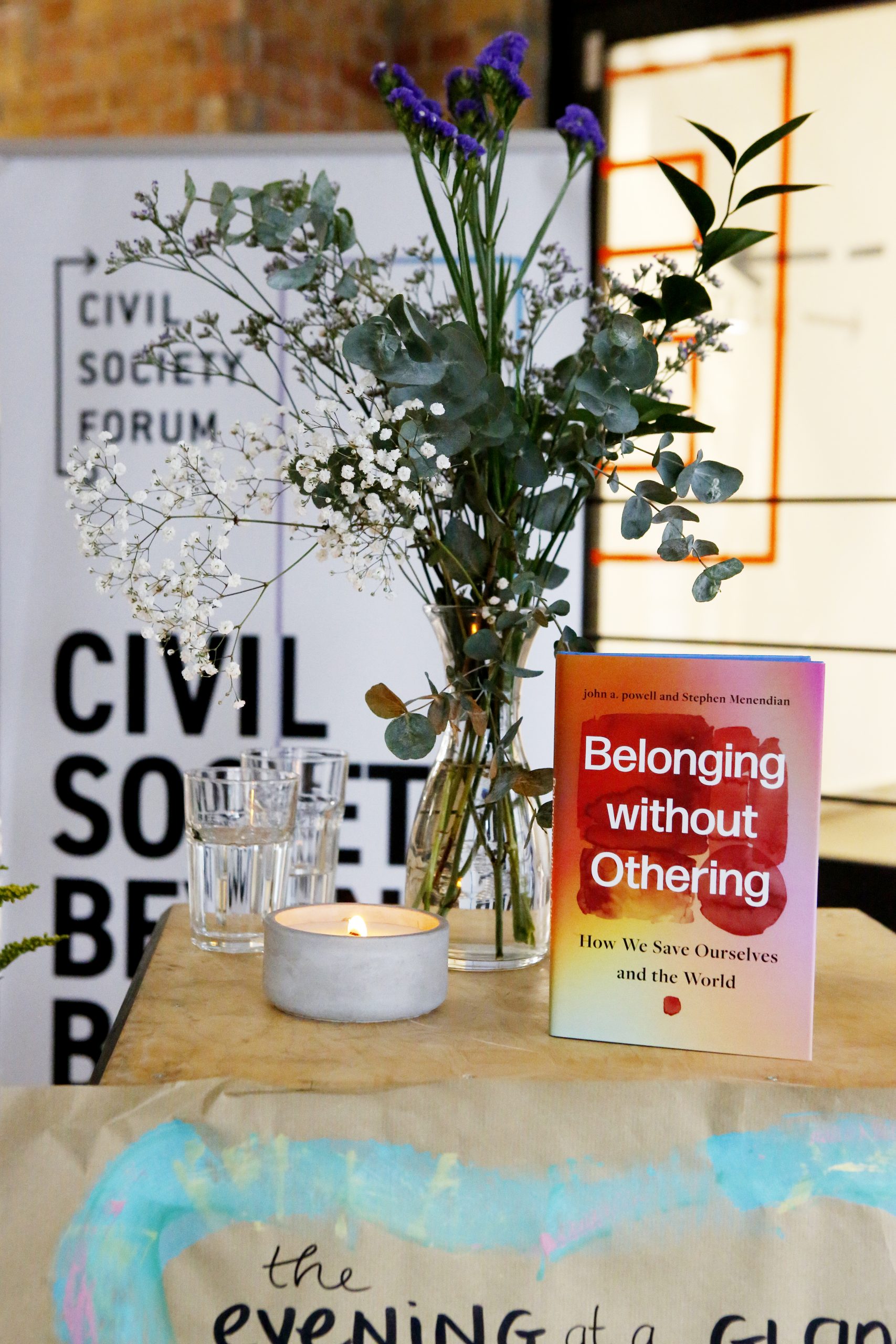
The evening was hosted together with the Democracy & Belonging Forum and the European Philanthropic Initiative on Migration, and opened with a keynote from john a. powell. A legal scholar and civil-rights expert who directs the Othering & Belonging Institute at UC Berkeley, powell did much to bring the ideas of “othering and belonging” and “bridging” into wide circulation, and his recent book, Belonging Without Othering, gave the evening its name.
Starting close to home
john didn’t begin with theory. He began with his own family. He grew up in a close and loving household — his father a minister, his own place in the world never in question. Then, at eleven, he asked a question about a core teaching of the church, and a distance opened. His father did not speak to him for five years. His mother worked, patiently, to bridge the two of them. The lesson he drew from it has shaped decades of research since: belonging, even inside love, even at home, can arrive with conditions attached.
From there, john offered a working theory of bridging. It does not happen through logical argument. It happens through the parts of us that respond to fear and safety long before they respond to facts. That is also, he noted, how authoritarian appeals work. Political rhetoric that looks “illogical” from the outside can still land with enormous force, because it was never aimed at the reasoning part of us in the first place. It speaks to the older, more instinctive part — wired for fear, wired for the need to belong.
This means bridging work must meet people at that same visceral level. Facts rarely move someone whose sense of safety is already under threat. There is a risk in bridging, he said. And there is a greater risk in not bridging.
Eight stories, eight rooms
After the opening, the building itself opened up. Eight storytellers from across Berlin’s communities each took a room and told one story, in their own words.
Several of the storytellers began with the self and its longing for connection. Monika reframed loneliness not as a diagnosis but as a shared human experience to move through — community as a verb, belonging as something you move in and out of rather than a place you arrive. mo spoke to what is learned, and unsettled, when the ground of belonging keeps shifting between categories underneath you.
And arjunraj asked how the stories we carry settle into the body — why some ask to be told while others stay protected by silence — and how telling a story in mutuality might let us belong in one another.
Others turned to the systems and inheritances that shape who gets to belong. D. Raiselis traced how an awareness policy taped to one Berlin club wall grew into a way of thinking about care at the scale of a whole city — nightlife, illness and the work of holding people. Jack spoke on unlearning patriarchy, on recognising ourselves in “the other” and on the long work of moving beyond the systems we inherit. And Denis explored the conventional routes to belonging — territory and language — and the different, quieter belonging that finally resonated through his artworks.
And some found belonging in memory and its silences. Giorgi showed how a family photo archive can become the storyteller of silenced, generational memory, speaking in images where words had gone quiet. Samira told a story of finding belonging despite her conditions not making it easy: from childhood othering to Palestine, from a room she built herself to an archive founded out of a need to be seen. A story, as she put it, about no longer waiting for an invitation.
Listening as a practice
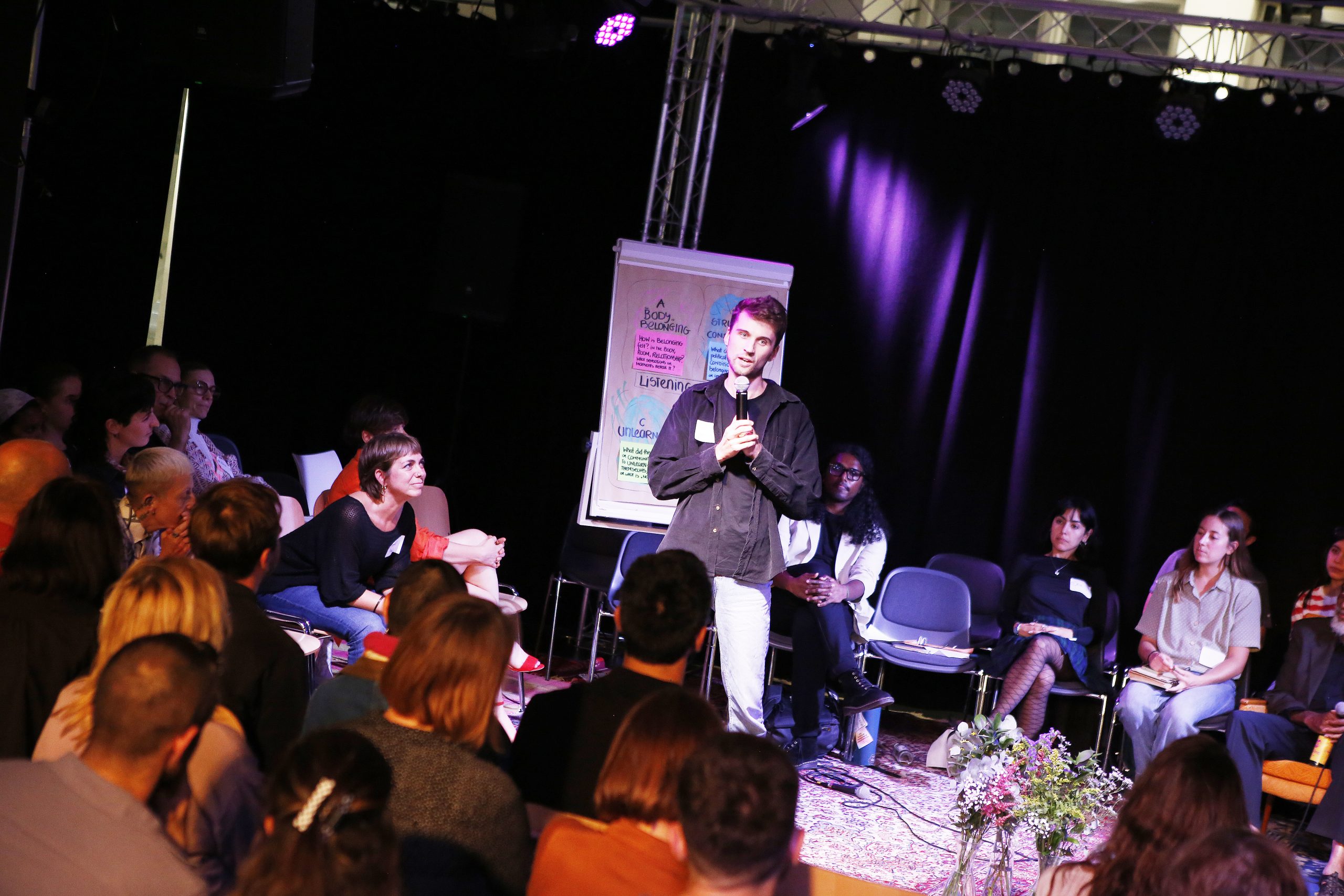
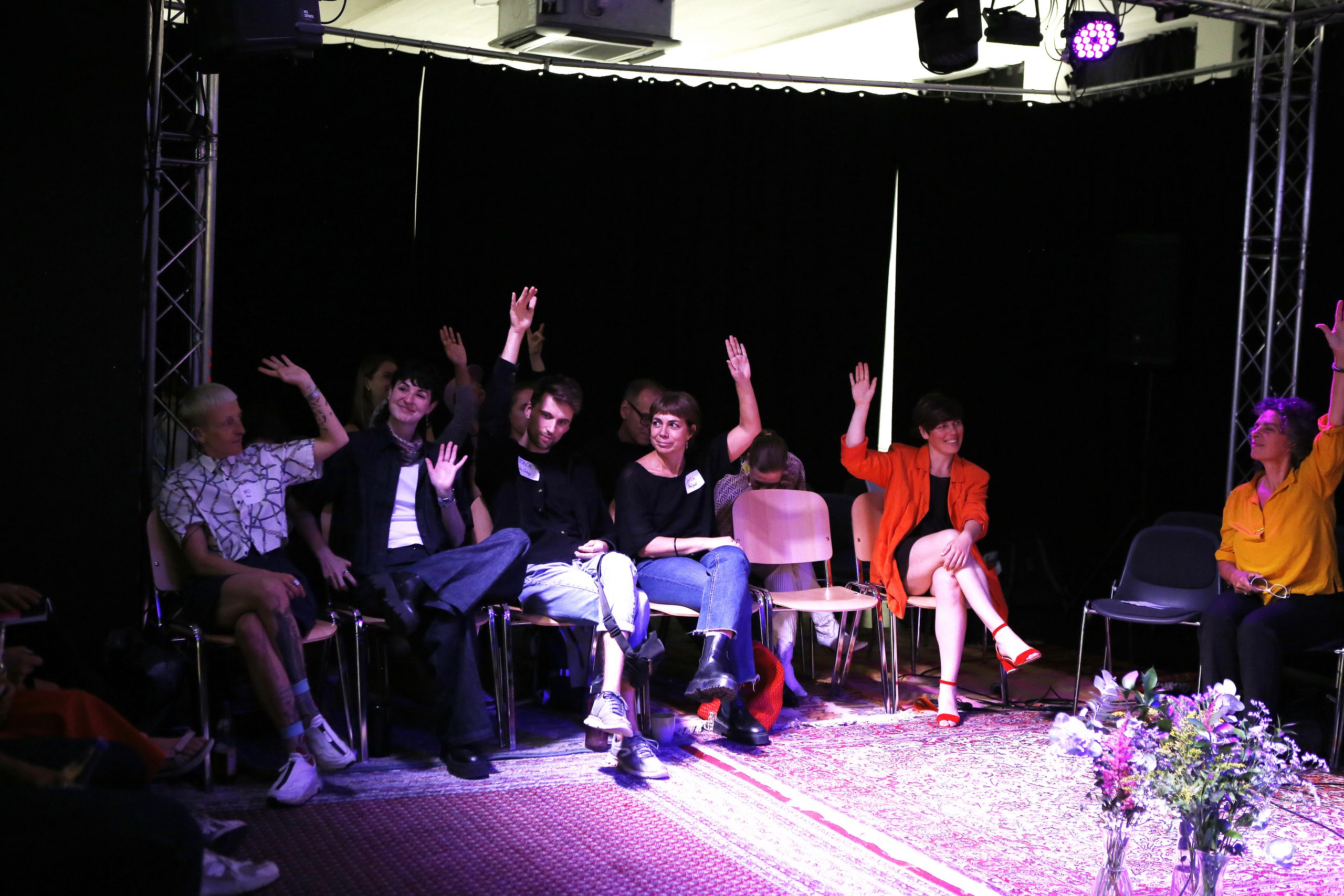
The audience was never simply an audience. Having chosen a storyteller to follow, each guest was asked to look at the evening’s question — how we belong across difference — through a set of listening lenses, holding their story up to each in turn:
Each lens tuned attention differently. The Body of Belonging asked how belonging is felt — in the body, the room, the relationship, and in the moments that reveal it. Structures & Conditions asked which organisational, political or relational conditions make belonging possible, or impossible. Unlearning asked what a person or community had to let go of — about themselves, about others, about what counts as “normal.” And The Edges asked who sits at the margin of a story: who is not yet fully included, and what it would take. Held together, the lenses turned one story into several.
Afterwards, listeners gathered to harvest what they had heard together — comparing how a single story could look so different from one lens to the next.
What emerged
What emerged looked more like what john had described as bridging itself: staying in relationship through difference, uncertainty and discomfort, without needing quick resolution.
Some of the questions that surfaced in the harvest circles have stayed with us since:
What if the person with the most power in the room is the most vulnerable one?
Are there ways to exclude without othering — and if so, what are they?
Where are the bridges inside our own families?
What we take forward
The evening did not resolve the question it started with, and it wasn’t meant to. What it did was give a hundred people a shared practice for holding it: tell a story, listen through one lens and harvest the ideas together.
Organised by Civil Society Forum e.V. and the Democracy & Belonging Forum, with the European Philanthropic Initiative on Migration. Graphic recording by Julia Hoffmann. Co-facilitation by arjun and Christa. Photos by Constanze Flamme.