By Nataliya Novakova, Executive Director of the Civil Society Forum
Our news cycle has come to resemble a kaleidoscope: with every turn, the pieces fall into a new pattern before we’ve had time to make sense of the last one. We barely register the shock before the next one arrives. Consider some examples from the past few months. In Saxony-Anhalt, the far-right AfD now holds the presidency of the state parliament. Also in Germany, the governing coalition plans to restrict the Freedom of Information Act, shutting out NGOs and foreign residents from requesting official information. Slovenia’s government has withdrawn its support for domestic civil society. And in Georgia, the government publicly rebuked the Georgian Young Lawyers’ Association for taking part in an OSCE human rights conference in Warsaw.
We have been talking about shrinking civic space for so long that it is almost surprising the process is still under way, as if it should have run its course by now. Yet the shrinking continues. As a Forum bringing together civil society organisations from across Europe, we are asking ourselves an uncomfortable question: what are we doing wrong, that so many people are standing by while democratic standards erode?
We are taking active steps to try and answer these difficult questions. One of them is our ongoing collaboration with the Othering & Belonging Institute at the University of California, Berkeley. In the summer, we hosted a large gathering of civic activists in Berlin, where we reflected on how we build our belonging to a society or group, exploring the structural patterns, cultural aspects and individual choices involved in building inclusive, open communities (read more about this event here).
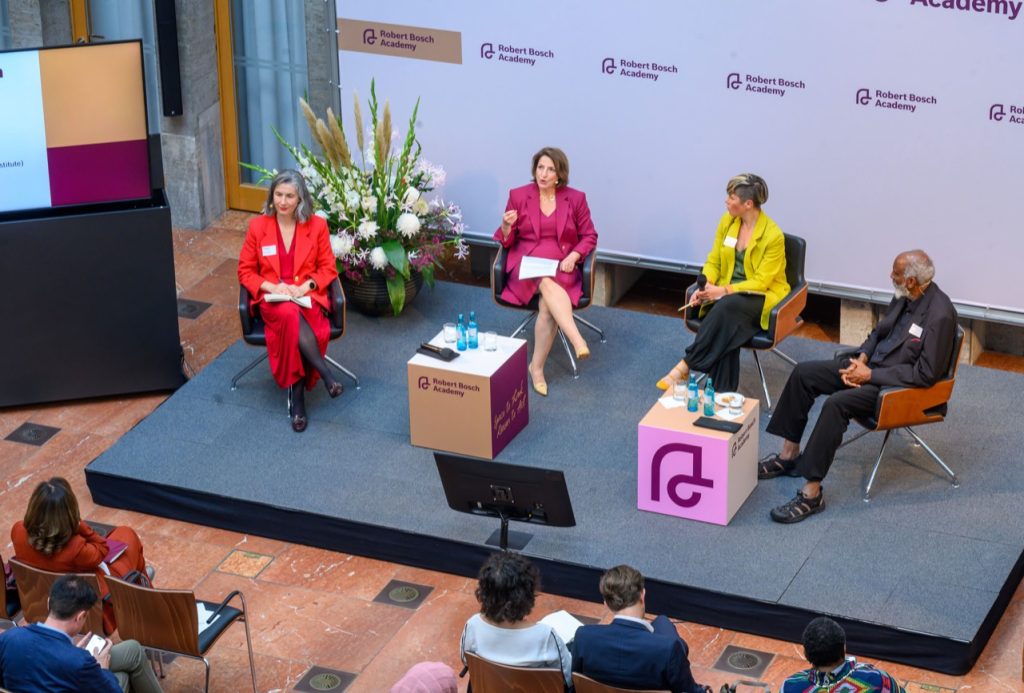
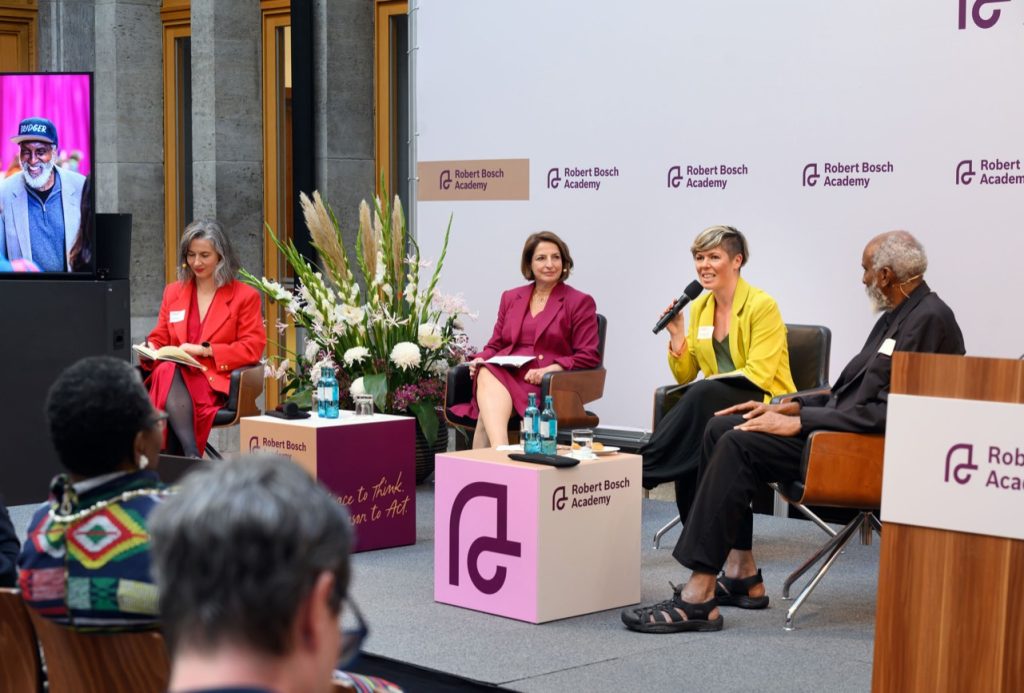
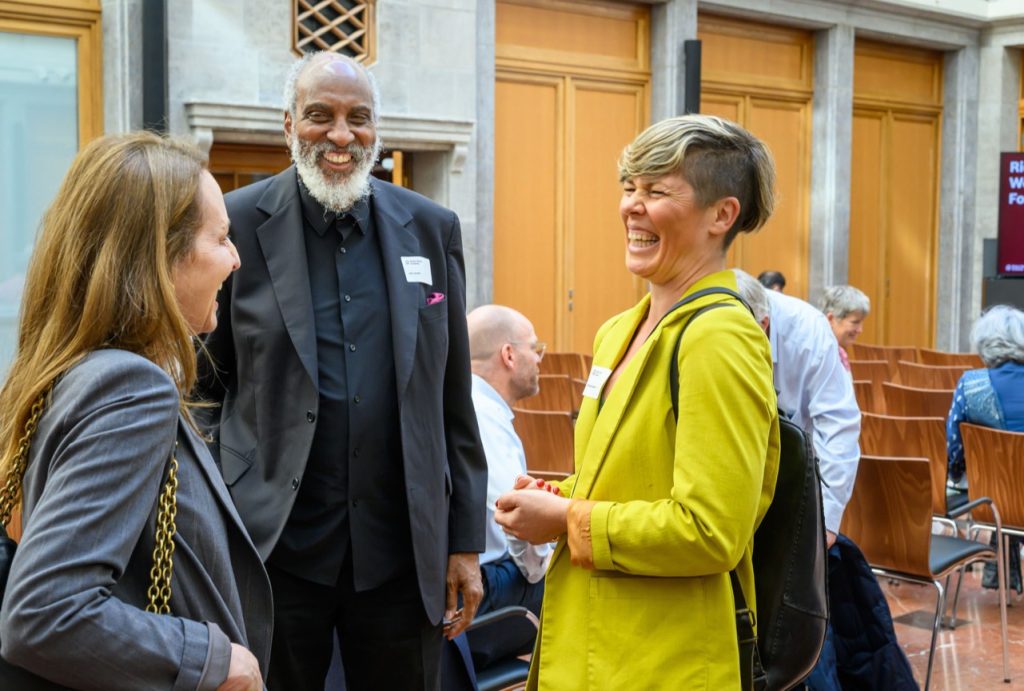
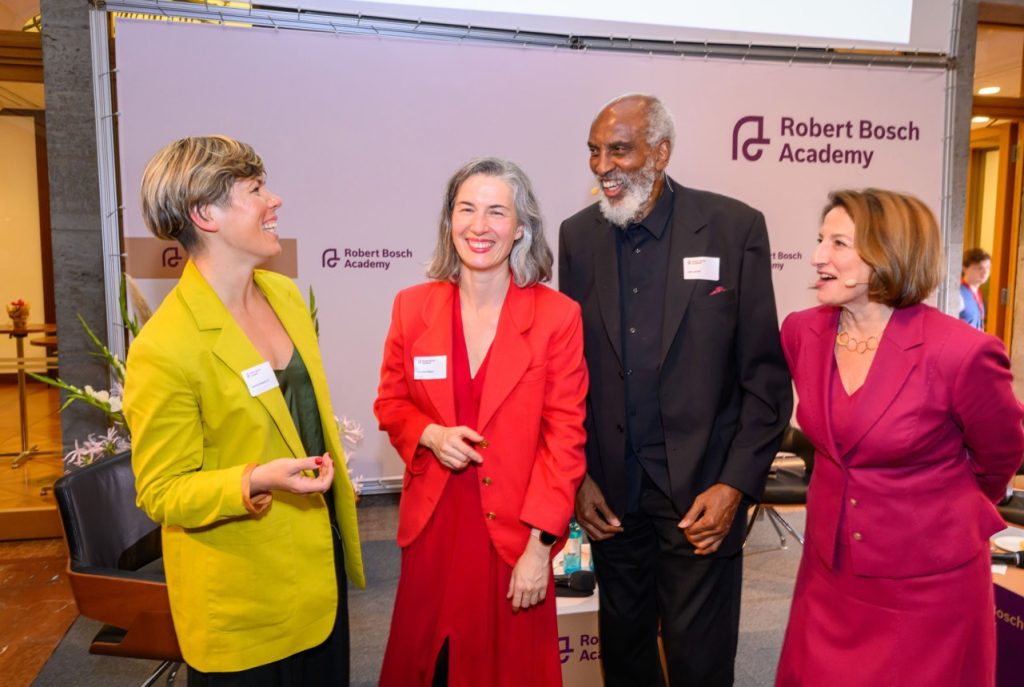
In October, we brought this conversation to an audience of global thinkers, policymakers and leaders at the Robert Bosch Academy’s Festival of Ideas in Berlin. I moderated a panel with john a. powell, director of the Othering & Belonging Institute; Hungarian politician Zsuzsanna Szelényi; and Polish sociologist and historian of ideas Karolina Wigura. We asked what stays after an election is over: what it takes for democratic movements and coalitions to keep going beyond the moment of electoral victory. Looking at recent political developments in Europe, the United States and beyond, we discussed how exclusion and antagonism so often backfire and lead to situations in which democratically minded leaders can’t maintain their hold on power for very long.
Much of our discussion focused on how democratic and liberal leaders treat their opponents. In polarised societies, where people build their identities around political camps, a condescending or dismissive attitude toward the other side does real harm. We see it in journalism that portrays AfD voters in Germany as uneducated, childish or irresponsible, and in politicians who call their opponents stupid. Such rhetoric only deepens the divide.
The Institute’s work on bridging in the United States offers a different model. Instead of confronting opponents, bridging approaches them with a genuine offer of conversation. The goal is not to agree on everything, but to see one another as people with real pain and legitimate fears. Once we can see each other this way, constructive conversations about a shared future become possible, and so does agreement on at least some policies and approaches.
In Europe, Péter Magyar, whose Tisza party won a landslide victory in Hungary’s April elections, seems to have applied something similar to bridging. For two years he travelled to villages across the country, meeting people face to face, offering real human connection and building small initiatives around simple local concerns. Bit by bit, he reclaimed a sense of Hungarian unity.
Another feature of politics that unites people and delivers lasting results seems to be a focus on what matters in people’s daily lives. Democracy has to work for the material conditions people care about: for example, housing, healthcare, education. The Hungarian campaign refused to be drawn into side debates and stayed focused on the fundamentals of economic and social life. The same can be said of Zohran Mamdani’s campaign in New York and Dominik Krause’s in Munich. That these three come from very different political traditions makes the lesson all the more pertinent.
Strengthening democracy will take a great deal of work. For civil society, it means looking honestly at how we practise inclusion and dialogue, and putting social justice back at the centre of what we do.
Photo credit: David Ausserhofer Fotografie